
 Tiếng Việt
 中文 (中国)

-
Using nets or plastic tarps occupying about 5-10% of the pond area to make nursery ponds.
-
Renovating nursery ponds in the same way culture ponds
-
Density
+ Black tiger shrimp: 10 shrimps/m2
+ White leg shrimp: 25 shrimps/m2
-
We recommend you not stock for the next crop if there is no fixed nursery pond because the survival rate will be low.
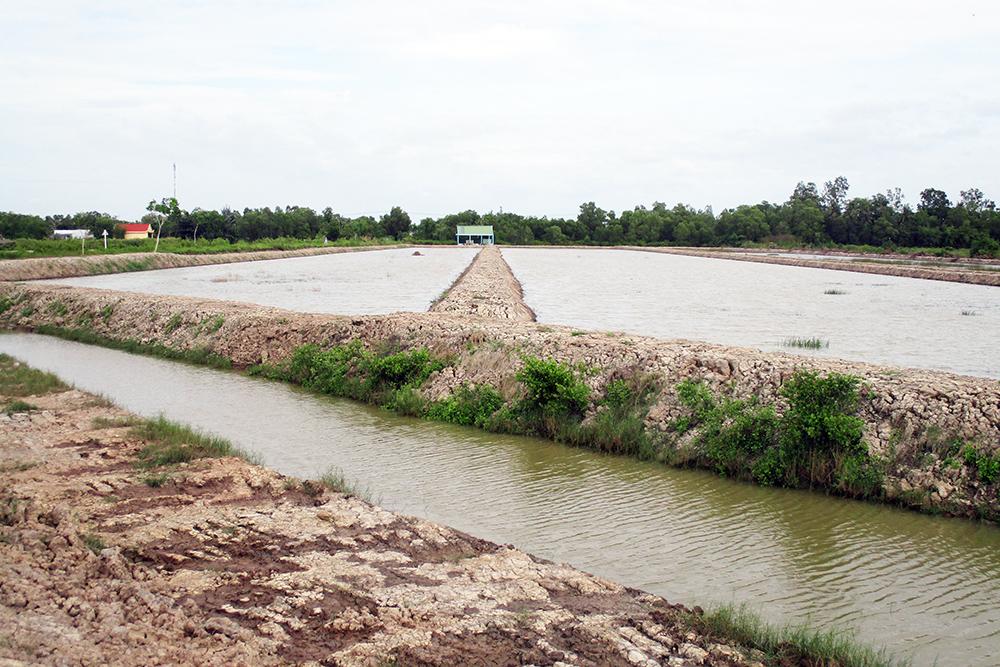
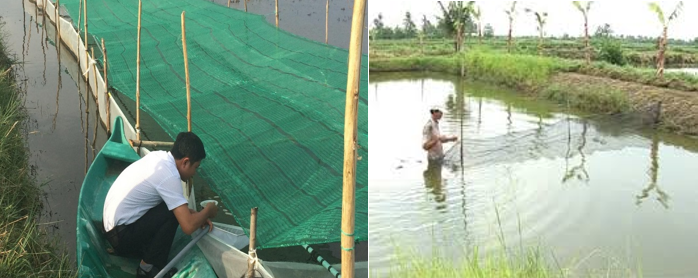
The nursery pond with nets
10/ Note that the better the nursery pond, the higher the survival rate. In addition, it is also significant to the success of the crop.
DOMESTICATED SHRIMP POSTLARVAE – THE KEY TO SUCCESS
See more:
- Shrimp market Update: facing new challenges
- Bioremediation For Profitable Vannamei Shrimp Farming
- Ecuador hosts global shrimp buyers for second shrimp summit
Master Huynh Duy Phong – Binh Minh Aquaculture Development Co., Ltd
Ths. Huỳnh Duy Phong – Công ty TNHH PTTS Bình MinhPreparing the nursery pond is an important step in an extensive shrimp farming model. It is also one of the factors determining the success of farming.
The purpose of the nursery pond is to improve the shrimp survival rate before stocking them in the pond.
For successful shrimp farming, we should consider the nursery pond like the culture pond. To have a good and effective nursery pond, we need to pay attention to the following issues as below.
See more: Tips for shrimp farming in the rainy season
1/ Preparing the nursery pond
-
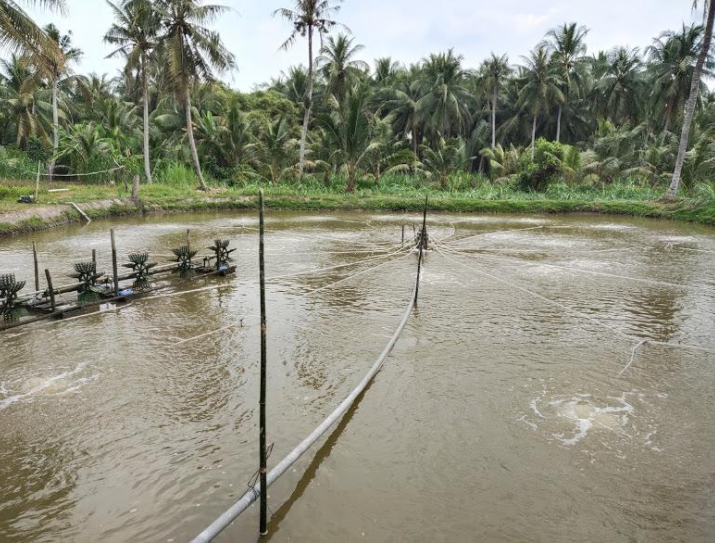
Area: It accounts for about 5-10% of the pond area

-
Instruments: preparing from 1-2 paddle wheels (10-20 propellers) or installing more aerators in the pond bottom.
2/ Renovating and treating water of nursery ponds
-
Drying the pond bottom or draining off the water. Using limes at a dose of about 30 – 60 kg/1000 m2 for acid-soil areas.
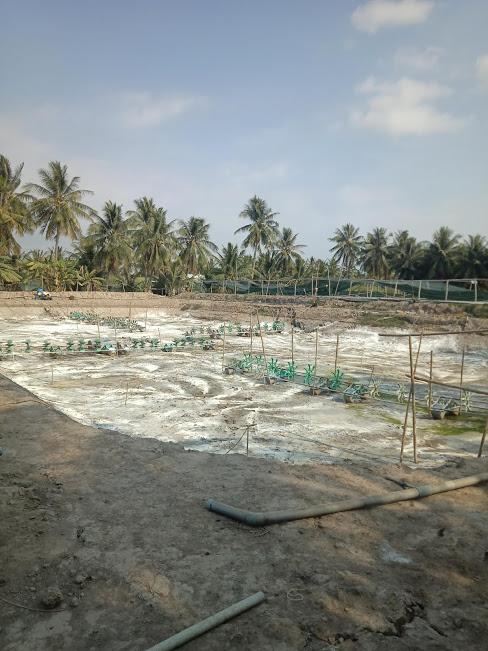
- Taking water into the nursery pond through filter bags to remove trash fish
-
Depth: about 1.2 – 1.4 m
-
Using Hat Sinh Hoc Phu Dien after taking enough water into the pond for two days. It helps create watercolor and natural food resources such as worms, rice snails, and copepods.
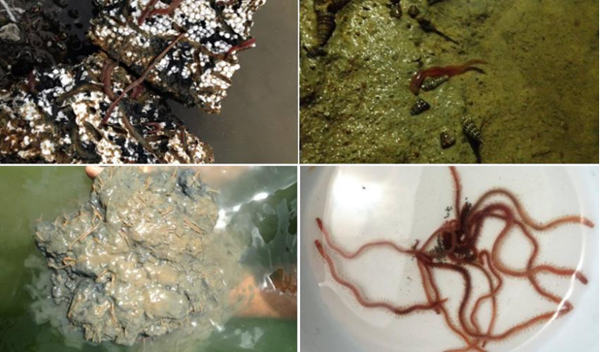
-
Using paddle wheels from 8 am to 4 pm daily after using the Hat Sinh Hoc Phu Dien
-
Adjusting environmental factors: pH from 7.5-8.3, alkaline > 120 mg/l
3/ Selecting and stocking postlarvae
After treating the water for 7-10 days, the watercolor and natural food has stabilized, we start stocking
-
Selecting reputable, quality, disease-free from postlarvae hatcheries.
-
Choosing postlarvae that are highly adaptable to severe environmental conditions and have high disease resistance
-
Stocking in the early morning or late afternoon
-
Acclimating shrimp with ponds water about 1-2 hours before stocking in clean plastic buckets with aeration
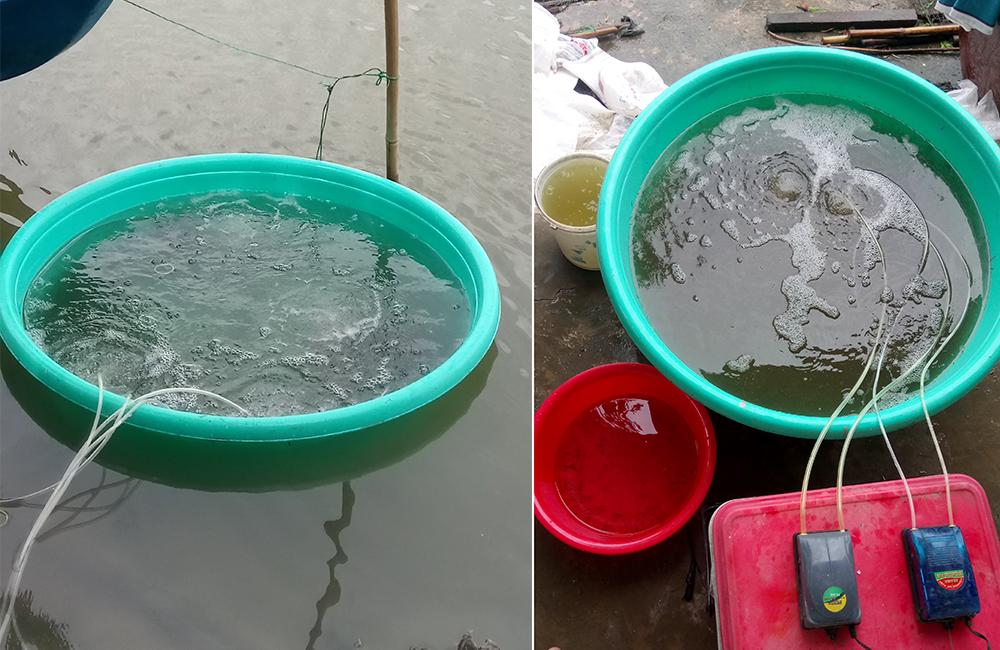
Acclimating shrimp before stocking
4/ Stocking density
- Density
+ Black tiger shrimp: 10 – 20 shrimps/m2
+ White leg shrimp: 25 – 30 shrimps/m2
5/ Taking care of postlarvae
-
Feeding shrimp from 3 – 4 times per day.
-
Using paddle wheels after feedings from 2 – 3 hours (oxygen > 50mg/l)
-
Periodically using probiotics from 5-7 days per time
6/ Shrimp nursery time
-
In the range of 25 – 35 days, depending on the farmer’s purpose and the weather condition, the nursery time is long or short
7/ Renovating and treating water of culture ponds
-
During the nursing period, you should renovate ponds in the same way as the nursery pond. However, you don’t need to set up paddle wheels.
-
The depth of water in the nursery pond is from 0.5 – 0.7 m
8/ Transferring shrimp from nursery pond to farming pond
-
Adjusting environmental factors between ponds and nursery ponds relatively equally.
-
Transferring shrimp after they reach the size of 800 – 1000 individuals/kg.
-
Transferring shrimp in the early morning or late afternoon.
-
There are several ways to transfer shrimp. The best way is to discharge the water from ponds to the nursery ponds, combined with using food as bait.
- Density
+ Black tiger shrimp: 1 shrimps/m2
+ White leg shrimp: 5 shrimps/m2
9/ In case there is no fixed nursery pond and no equipment such as paddle wheels or aerators
-
Using nets or plastic tarps occupying about 5-10% of the pond area to make nursery ponds.
-
Renovating nursery ponds in the same way culture ponds
-
Density
+ Black tiger shrimp: 10 shrimps/m2
+ White leg shrimp: 25 shrimps/m2
-
We recommend you not stock for the next crop if there is no fixed nursery pond because the survival rate will be low.
The nursery pond with nets
10/ Note that the better the nursery pond, the higher the survival rate. In addition, it is also significant to the success of the crop.
DOMESTICATED SHRIMP POSTLARVAE – THE KEY TO SUCCESS
See more:
- Shrimp market Update: facing new challenges
- Bioremediation For Profitable Vannamei Shrimp Farming
- Ecuador hosts global shrimp buyers for second shrimp summit
SẢN PHẨM PHỤC VỤ NỀN NÔNG NGHIỆP XANH
TIN TỨC NỔI BẬT
Impact of Novel Feed Ingredients on Growth, Digestibility, Enzymes, and Gene Expression in Pacific White Shrimp, Penaeus vannamei
As aquaculture strives for sustainability, replacing fish meal in shrimp diets remains a challenge. This [...]
Jul
Effects of Shrimp Aquaculture on Mangrove Soil Carbon Stocks and Sustained-Flux Global Warming Potentials
Mangrove forests provide critical ecosystem services, including serving as nursery habitats for fish, protecting coastlines [...]
Jul
Warming-Driven Migration of Enterotypes Mediates Host Health and Disease Statuses in Ectotherm Litopenaeus vannamei
With modern industrialization and urbanization, global warming has become a serious threat to ecosystems, especially [...]
Jul
Pivotal Roles of Fish Nutrition and Feeding: Recent Advances and Future Outlook for Brazilian Fish Farming
As global aquaculture shifts toward ecological responsibility, Brazil’s nutritional strategies are evolving to reduce reliance on [...]
Jul
Analyze of Production Performance of Shrimp Litopenaeus vannamei Culture and Water Quality on Earthen Pond Quality on Earthen Pond and HDPE-Lined Pond
As global demand for seafood continues to rise, aquaculture faces increasing pressure to optimize production [...]
Jul
Listening to the pond bottom: How bioacoustics can transform shrimp feeding management
Study shows acoustic monitoring overcomes water turbidity limitation, optimizes growth and reveals novel behavioral patterns [...]
Jul
Translucent Post-larvae Disease beyond China: From outbreak recognition to diagnostic readiness
Recent studies are providing shrimp hatcheries with stronger tools to recognize, characterize and screen for [...]
Jul
Killing methods, post-slaughter quality, part 1
Developing a slaughter program Harvesting fish for slaughter usually requires some handling and concentration of [...]
Mar
Red hogweed fights WSSV, promotes growth in tiger shrimp
Herbaceous plant known to have medicinal properties, is used by indigenous people in India Medicinal [...]
Mar
Critical decisions for shrimp harvesting and packing, Part 3
Final stages include receiving protocols at processing plants, weighing, grading and freezing Reception As soon [...]
Feb
Critical decisions for shrimp harvesting and packing, Part 2
Melanosis, or blackspot, can be presented with antioxidant treatments like sodium metabisulfite Harvest In both [...]
Feb
Critical decisions for shrimp harvesting and packing, Part 1
Important steps to follow in order to maintain product quality The harvest of a shrimp [...]
Feb