
 Tiếng Việt
 中文 (中国)

Alkalinity is one of the important factors in shrimp farming because it is directly related to pH stability and the molting activity of shrimp. The higher the alkalinity, the more stable pH of the water. Low alkalinity significantly affects the molting ability and survival rate of cultured shrimp. High or low alkalinity depends on the soil, water source, and bicarbonate addition activity. In the farming process, alkalinity depends on the growth of algae and other organisms present in the pond, such as snails and bivalve mollusks. In addition, it is determined by the molting activity of the shrimp, the water exchange level, and the bicarbonate supplement activity of the farmer.
The ideal alkalinity is from 140-180 mg CaCO3 per liter.
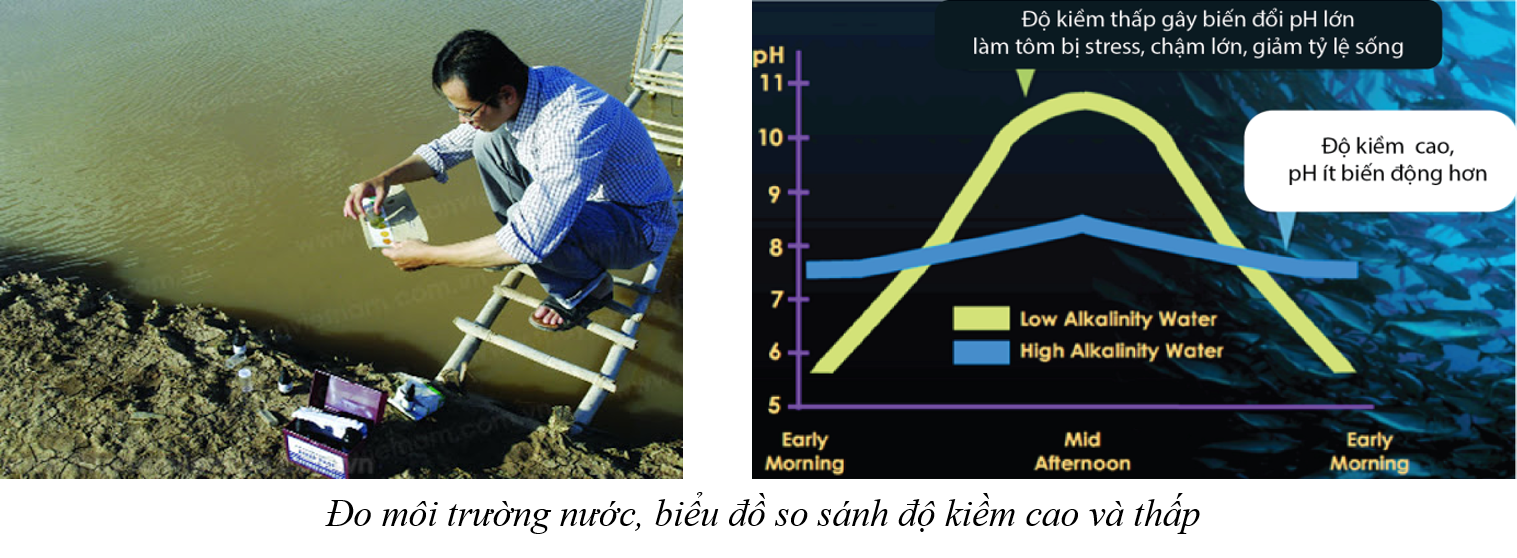
1. Causes and consequences
When alkalinity is higher than 200 mg CaCO3 per liter, combined with a pH greater than 8.5, they prevent the shrimp molting process. The high content of heavy metals and alum in the pond causes calcification of the shrimp shell, making slow molting. It leads to shrimp’s slow growth and unequal growth rate.
When the alkalinity is lower than 100 mg CaCO3 per liter, snails and bivalve mollusks compete for alkalinity content with farmed shrimp in ponds. It affects the shrimp molting process, leading to soft shells, curled and white bodies, slow growth, and a low survival rate. Ponds with very low alkalinity (under 50 mg CaCO3 per liter) are often difficult to create watercolor.
2. Treatment measures
– In case of high alkalinity:
- Changing water, using EDTA with a dose of 2kg/1000m3 for 2 consecutive days, periodically 5 days/time if groundwater is used.
- Supplementing mineral with a dose of 2-5kg/1000m3 to stimulate shrimp to create a new shell.
– In case of low alkalinity:
- Killing snails and bivalve mollusks at the beginning of the crop.
- Stocking density should be appropriate. The salinity is higher than 5 ppt.
- Increasing alkalinity by using Dolomite lime and CaCO3 with a dose of 10kg/1000m3, and Bicarbonate with 2kg/1000m3, periodically 2 days/time.
- Using micro-minerals and macro-minerals to stimulate shrimp shell hardening.
- Frequently checking the pond water environment for timely treatment measures.
By Master Huynh Duy Phong – Binh Minh Aquaculture Development Co., Ltd
SẢN PHẨM PHỤC VỤ NỀN NÔNG NGHIỆP XANH
TIN TỨC NỔI BẬT
A comparison of resource use in shrimp farming, part 3: Energy
Shrimp farming in the five major exporting countries could use less energy by focusing on [...]
Sep
A comparison of resource use in shrimp farming, part 2: Water
Shrimp farming uses very little freshwater directly – only that required for drinking purposes, sanitation [...]
Sep
A comparison of resource use in shrimp farming, part 1: Land
The intensity of shrimp production could be greatly increased without any additional direct land use [...]
Sep
Study finds marine amphipods can upcycle crop waste into aquaculture feeds
Researchers found marine amphipods can convert agricultural waste into nutritious ingredient for aquaculture feeds Researchers [...]
Sep
Water quality impacts on health and performance of fish and shrimp, Part 3: The nitrogenous compounds ammonia, nitrite and nitrate
Effective monitoring and management of ammonia, nitrite and nitrate are essential in intensive aquaculture systems, [...]
Sep
Nitrogen isotopes help researchers verify fishmeal sources for aquafeeds
Nitrogen isotope signatures can verify fishmeal use in aquaculture diets, potentially improving seafood traceability Researchers [...]
Aug
Water quality impacts on health and performance of fish and shrimp, Part 2: pH, carbon dioxide, alkalinity, hardness and the water buffering system
Although there is a general consensus on the importance of water quality, many farmers still [...]
Aug
Impact of Novel Feed Ingredients on Growth, Digestibility, Enzymes, and Gene Expression in Pacific White Shrimp, Penaeus vannamei
As aquaculture strives for sustainability, replacing fish meal in shrimp diets remains a challenge. This [...]
Jul
Effects of Shrimp Aquaculture on Mangrove Soil Carbon Stocks and Sustained-Flux Global Warming Potentials
Mangrove forests provide critical ecosystem services, including serving as nursery habitats for fish, protecting coastlines [...]
Jul
Warming-Driven Migration of Enterotypes Mediates Host Health and Disease Statuses in Ectotherm Litopenaeus vannamei
With modern industrialization and urbanization, global warming has become a serious threat to ecosystems, especially [...]
Jul
Pivotal Roles of Fish Nutrition and Feeding: Recent Advances and Future Outlook for Brazilian Fish Farming
As global aquaculture shifts toward ecological responsibility, Brazil’s nutritional strategies are evolving to reduce reliance on [...]
Jul
Analyze of Production Performance of Shrimp Litopenaeus vannamei Culture and Water Quality on Earthen Pond Quality on Earthen Pond and HDPE-Lined Pond
As global demand for seafood continues to rise, aquaculture faces increasing pressure to optimize production [...]
Jul