
 Tiếng Việt
 中文 (中国)

Nitrogen isotope signatures can verify fishmeal use in aquaculture diets, potentially improving seafood traceability
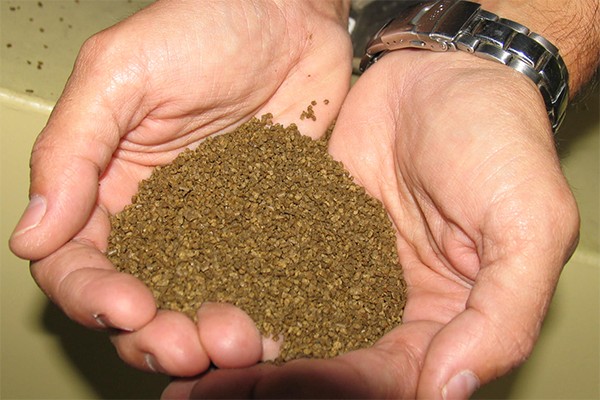
Researchers have identified a new way to determine whether farmed fish were fed fishmeal, offering the aquaculture industry a potential tool to verify feed sources as alternative ingredients become more common.
The study, led by the F3 – Future of Fish Feed initiative, found that naturally occurring nitrogen isotope signatures in fish muscle can reliably indicate whether fishmeal was included in aquaculture feeds. The findings, published in Fishes, could provide producers and seafood buyers with a science-based tool for verifying feed sources.
To test the approach, researchers analyzed carbon and nitrogen isotope data from fish muscle samples collected during feeding trials involving seven aquaculture species, along with feed samples from two trials. They found that the nitrogen isotope known as δ¹⁵N consistently distinguished fish raised on diets containing fishmeal from those fed alternative ingredients.
“As next-generation feed ingredients scale and aquaculture producers adopt formulation strategies that reduce reliance on marine ingredients, isotopic analysis could help validate sustainability claims, detect potential fraud and strengthen consumer confidence,” said Michael Tlusty, the study’s senior author, professor of sustainability and food solutions at the University of Massachusetts Boston and F3 Challenge judge.
Across nearly all species studied, fish fed diets containing fishmeal had higher nitrogen isotope values than those raised on plant-based feeds. Fish fed mixed diets containing both plant- and animal-based ingredients consistently fell between the two.
The researchers also found that other feed ingredients, including fish oil, algal oil and poultry byproduct meal, did not appear to affect the nitrogen isotope signature. According to the study, the results suggest the method can reliably distinguish diets with substantial differences in fishmeal content, although additional research is needed to determine how well it can detect smaller amounts of fishmeal in aquaculture feeds.
As demand for farm-raised seafood continues to grow, aquaculture producers are increasingly adopting alternative feed ingredients as fishmeal supplies become more limited. The researchers say that a tool that is able to confirm what fish are fed will become increasingly important as those feed formulations evolve.
The study suggests isotopic analysis could provide a science-based way to verify whether fishmeal was used in aquaculture feeds and, with further research, potentially trace the origins of ingredients. The research tool will be used to verify fishmeal inclusion in the current F3 Fish Farm Challenge, a global competition designed to eliminate wild-caught marine ingredients in aquaculture.
By Responsible Seafood Advocate
Read more:
SẢN PHẨM PHỤC VỤ NỀN NÔNG NGHIỆP XANH
TIN TỨC NỔI BẬT
A comparison of resource use in shrimp farming, part 3: Energy
Shrimp farming in the five major exporting countries could use less energy by focusing on [...]
Sep
A comparison of resource use in shrimp farming, part 2: Water
Shrimp farming uses very little freshwater directly – only that required for drinking purposes, sanitation [...]
Sep
A comparison of resource use in shrimp farming, part 1: Land
The intensity of shrimp production could be greatly increased without any additional direct land use [...]
Sep
Study finds marine amphipods can upcycle crop waste into aquaculture feeds
Researchers found marine amphipods can convert agricultural waste into nutritious ingredient for aquaculture feeds Researchers [...]
Sep
Water quality impacts on health and performance of fish and shrimp, Part 3: The nitrogenous compounds ammonia, nitrite and nitrate
Effective monitoring and management of ammonia, nitrite and nitrate are essential in intensive aquaculture systems, [...]
Sep
Nitrogen isotopes help researchers verify fishmeal sources for aquafeeds
Nitrogen isotope signatures can verify fishmeal use in aquaculture diets, potentially improving seafood traceability Researchers [...]
Aug
Water quality impacts on health and performance of fish and shrimp, Part 2: pH, carbon dioxide, alkalinity, hardness and the water buffering system
Although there is a general consensus on the importance of water quality, many farmers still [...]
Aug
Impact of Novel Feed Ingredients on Growth, Digestibility, Enzymes, and Gene Expression in Pacific White Shrimp, Penaeus vannamei
As aquaculture strives for sustainability, replacing fish meal in shrimp diets remains a challenge. This [...]
Jul
Effects of Shrimp Aquaculture on Mangrove Soil Carbon Stocks and Sustained-Flux Global Warming Potentials
Mangrove forests provide critical ecosystem services, including serving as nursery habitats for fish, protecting coastlines [...]
Jul
Warming-Driven Migration of Enterotypes Mediates Host Health and Disease Statuses in Ectotherm Litopenaeus vannamei
With modern industrialization and urbanization, global warming has become a serious threat to ecosystems, especially [...]
Jul
Pivotal Roles of Fish Nutrition and Feeding: Recent Advances and Future Outlook for Brazilian Fish Farming
As global aquaculture shifts toward ecological responsibility, Brazil’s nutritional strategies are evolving to reduce reliance on [...]
Jul
Analyze of Production Performance of Shrimp Litopenaeus vannamei Culture and Water Quality on Earthen Pond Quality on Earthen Pond and HDPE-Lined Pond
As global demand for seafood continues to rise, aquaculture faces increasing pressure to optimize production [...]
Jul